An Industry with Too Many Work-Related Injuries
The average age in the hairdressing industry is around 28. Not the number of years in the profession, but actual age. A large part of the explanation is that, as an industry, we do not know enough about ergonomics. Many people trained in salons where working conditions were never a priority, and where the focus was on saving a little here and there instead of investing in the right equipment. Here are my best rules of thumb for choosing a styling chair that actually suits the way you work.
The average age of hairdressers is only 28, and a large part of the reason is work-related injuries and poor ergonomics. I am passionate about helping our industry get better at avoiding them.
Try the Chair Before You Invest
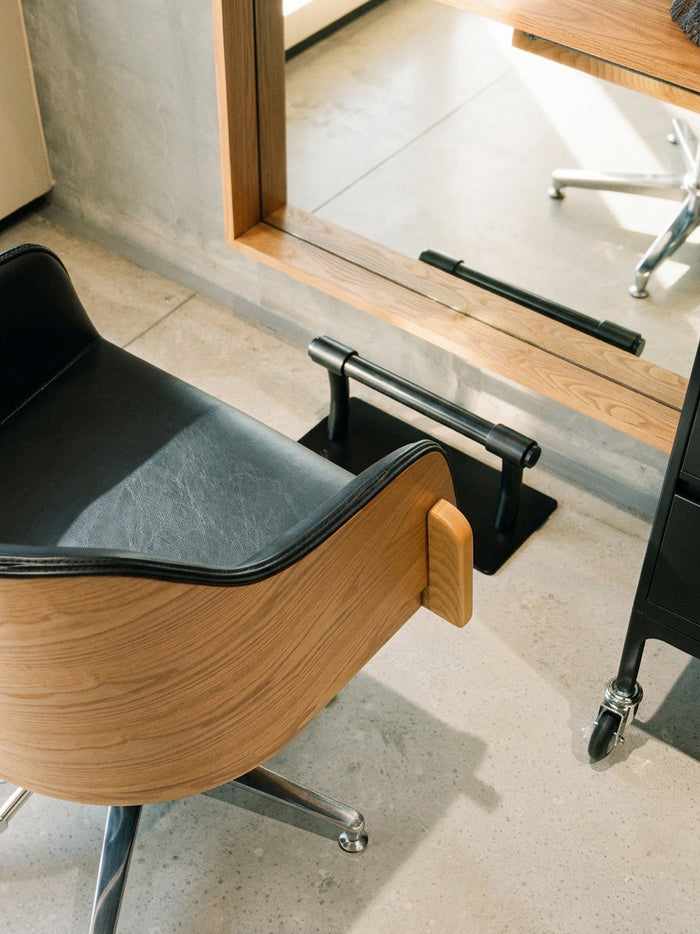
The most important advice is also the most overlooked: go out and try the furniture before you make a decision. This applies whether you are buying new or used. If you are buying used from a private seller, ask whether you can come by and stand behind the chair first. If you are buying new, find a showroom where you can try the chair instead of just looking at a picture. Just Add People has Northern Europe's largest showroom, precisely because it should be possible to stand behind and sit in the chairs before making a decision.
Feel free to bring a colleague, friend or partner, seat them in the chair and pretend that you are working on them. It is a completely different experience from simply looking at the chair and thinking "it is pretty" or worrying about the price. The only way to find out whether the chair actually works is to try it, just as you test a sofa or a kitchen before buying it.
Seat Height Is Your Starting Point
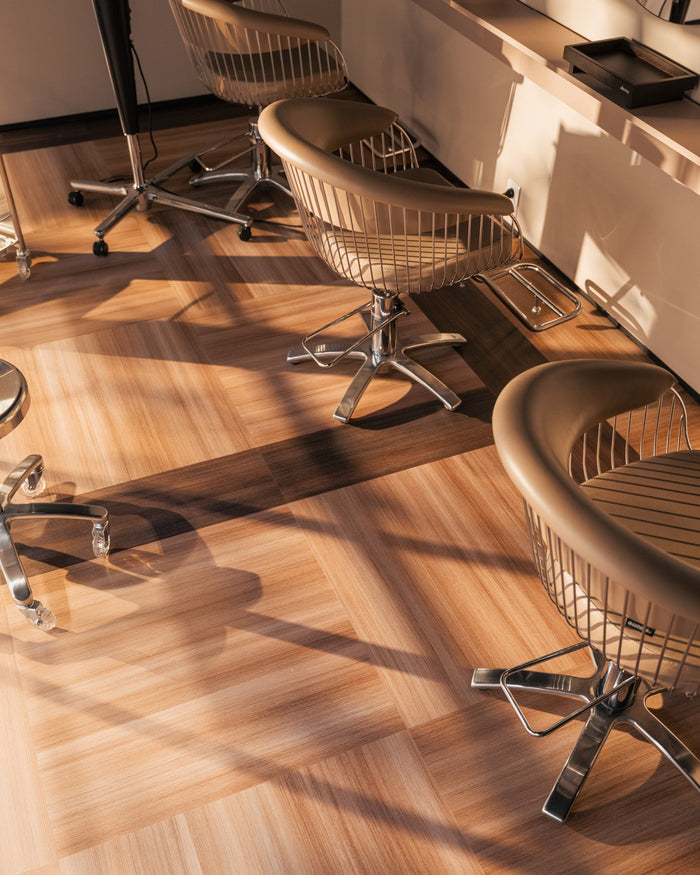
Most hairdressers are not particularly tall, so a good rule of thumb is that the styling chair should be able to adjust between 38 and 42 centimetres in seat height. Seat height is measured from the top of the seat down to the floor. However, seat height is only one variable. How far the backrest reclines the client has just as much importance for how upright the client sits. Your own height matters, as do the client's height and the length of the client's upper body. All of this together determines whether your working position is actually good - not seat height alone.
How to Know That You Are Standing Correctly
The rule of thumb here is that the chair should be able to go high enough and low enough for you to stand relaxed in 95 out of 100 situations, with your shoulders rolled back, and think: "Ahhh.. this is a good working position". You should not raise your shoulders towards your ears, lean forwards or stretch your arms too far towards the client because the backrest is too thick for you to get close enough.
You should have that wonderful feeling of standing comfortably: shoulders rolled back, back straight, elbows close to your sides. No raised shoulders, no outstretched arms.
The Investment Pays for Itself
Good ergonomics cost more on paper, but poor ergonomics cost more in reality. If you have to keep the salon closed one day a week, or one day every two weeks, because your back cannot take any more, that money is going out the window week after week. If you have invested in the right equipment from the start, whether with borrowed or saved money, you will earn that investment back many times over because you avoid the injuries that would otherwise cost you days of closure.
Be Careful When Shopping Online
Many people buy styling chairs online without taking a closer look at the seat height or variant. The problem is that many retailers use the same product images across several models of the same chair. The major difference is typically that there is a standard pump and a low pump, with the latter costing a little extra. As a starting point, most chairs are sold with the standard pump to make the price/discount more attractive. Check the seat height before you order.
Good to Know
There are many retailers where the only thing that matters is the order itself, and where it is then nearly impossible to return the item, or where a return costs more than it is worth. The solution is the same as before: try the chair, check the seat height and ask questions before you pay.
My Personal Favourite
If I had to point to one chair, my personal favourite is the Greiner 59, both to sit in as a client and to work behind as a hairdresser. But the right chair for you depends on your own body and your salon, so explore the selection of styling chairs yourself and find the design that suits you.
The most important thing is that we get better at helping each other in the industry understand what good ergonomics actually require. It is the only way to raise the average age in the profession. If you have questions about which chair suits you, or would like to visit and try them in the showroom, you are welcome to write to me.