Autumn holiday: Orders will be shipped on the 19th.
How to choose the right treatment stool
A guide to choosing the right treatment stool if you are a cosmetologist, massage therapist, tattoo artist or acupuncturist—not a hairdresser.


18.08.2026
Rasmus Østergaard
If you’re a hairdresser, you’ve probably already read my other guides on salon stools and washing units. But if you’re a cosmetologist, massage therapist, tattoo artist or acupuncturist, you sit in a completely different way than a hairdresser does, so your stool needs to be chosen differently too. This guide is about how to find the right treatment stool when you remain seated while the client lies or sits in front of you.
What is a treatment stool?
A treatment stool is the stool you, as a practitioner, sit on during the treatment itself, unlike the salon stool, which is used by the hairdresser. It is typically used for tattooing, eyelash treatments, facials, massage or acupuncture—in other words, treatments where you sit still for long periods at a time instead of constantly moving around the client.
Saddle seat or regular seat?
The short answer: try both. A saddle stool, such as Stella, has a curved seat without a backrest that keeps you upright all day because your pelvis naturally tilts slightly forward. It is not a feeling everyone is used to from day one, but many of my customers tell me that their back simply feels less tired after a long day once their body has gotten used to it. A regular seat, on the other hand, feels more familiar, with no adjustment period.
With or without a backrest?
This is where the treatment stool really differs from the salon stool. A hairdresser rarely sits still for very long, so a backrest is often unnecessary. But if you sit for hours at a time while tattooing, giving a facial or performing an acupuncture session, a treatment stool with a backrest is often the right choice. Your body needs that support when you are not constantly moving around the client. Rolio is a good example: a soft backrest that provides immediate support with no adjustment period at all.
With or without wheels?
Benefits of an ergonomic treatment stool with wheels: You can quickly move into the right angle in relation to the client without having to stand up or lean unnaturally. This is practical if you work on several different areas of the body during the same treatment.
Drawbacks of wheels: Wheels are moving parts, and in a busy clinic they easily collect hair and dust. So choose a model with hair-resistant covers on the wheels, so you don’t have to clean them every other day.
Benefits of a treatment stool without wheels: This is where the major difference from a hairdresser’s salon stool comes in. If you work with precision, tattooing, eyelashes or similar treatments, a stable base without wheels gives you a firm starting point, so the stool does not risk sliding during a detailed movement. Yume from Takara Belmont is one of the most popular choices among tattoo artists and cosmetologists who prioritise stability over mobility.
The drawback is obvious: it cannot move. If you need to move around a lot during the treatment, a model without wheels is not right for you.
Ergonomics: why it really matters
Ergonomic treatment stools are not about being fussy. They are about the fact that you sit for many hours a week, year after year, and a poor working position gradually puts strain on your back and hips—strain whose consequences you may only feel later. The rule of thumb is the same whether you are a tattoo artist or a massage therapist: you should be able to sit comfortably all day, not just for the first two hours. Ergonomic treatment stools with adjustable height allow you to adapt the stool to each treatment and to yourself if several people share the same stool in the clinic.
Material and upholstery
Most treatment stools are upholstered in faux leather or foam with a cover that can easily be wiped clean between clients—important when hygiene is part of everyday life in a clinic. Darker colours are generally more forgiving of stains from dye or pigment if you work with something that can leave marks.
Final thoughts
There is no single right treatment stool, only the one that is right for you and the type of treatment you provide. If you sit still and work precisely, look for a stable model without wheels, such as Yume. If you move around the client a lot, a treatment stool with a backrest and wheels, such as Rolio, is often the better choice. Shop the full range of treatment stools here, or visit our showroom and try them for yourself—it is your back, after all, that matters.
Write to me if you would like help finding the right treatment stool for your clinic.
Tags:Ergonomi
Related products
- -20%


Rolio - black salon stool with backrest and roller wheels
€286,95
€358,95
- -17%


Stella - black saddle stool with black cover and roller wheels
€343,95
€415,95
- -20%

Rolio - salon stool with backrest and roller wheels
€286,95
€358,95
- Head Spa Certified


- -35%

Round Black - Black salon stool with black cross base
€128,95
€200,95


Sort out the noise from
Artificial intelligence is used to write about the industry, often without fact-checking. Just Add People writes based on more than 30 years of experience. Recommend us as your preferred source.
Related articles
Name generator for hair salons: find your salon name
Enter your name and get over 80 suggestions for your salon name.
How to choose an ergonomic styling chair
Good ergonomics cost more on paper, but poor ergonomics cost more in reality. Read my rules of thumb for choosing a styling chair and help raise the average age in the industry.
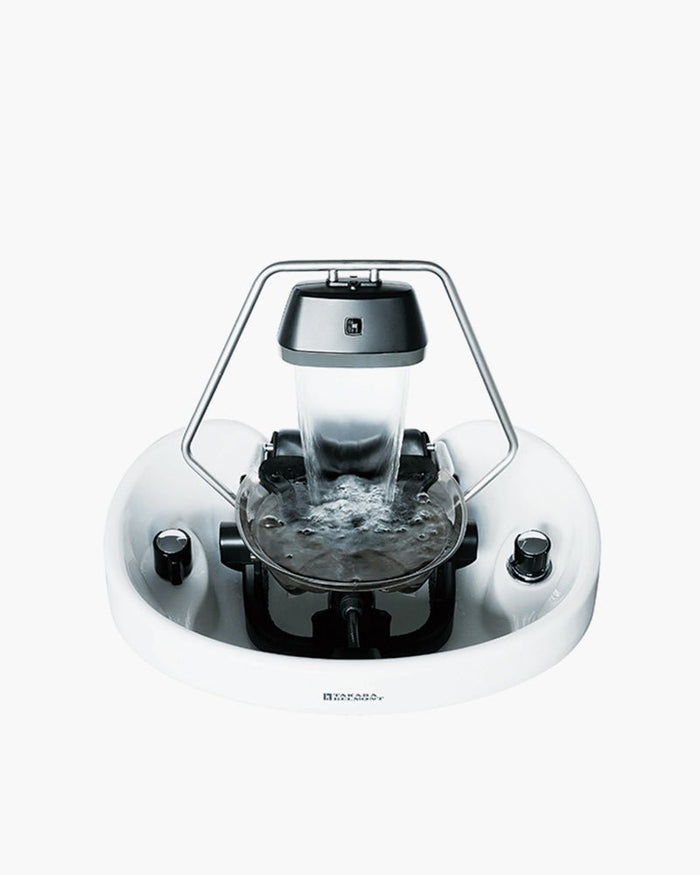
Head Spa: questions and answers
Is Head Spa a protected title? Why does the certification exist, and how do you get started? Answers to the most frequently asked questions about Head Spa.
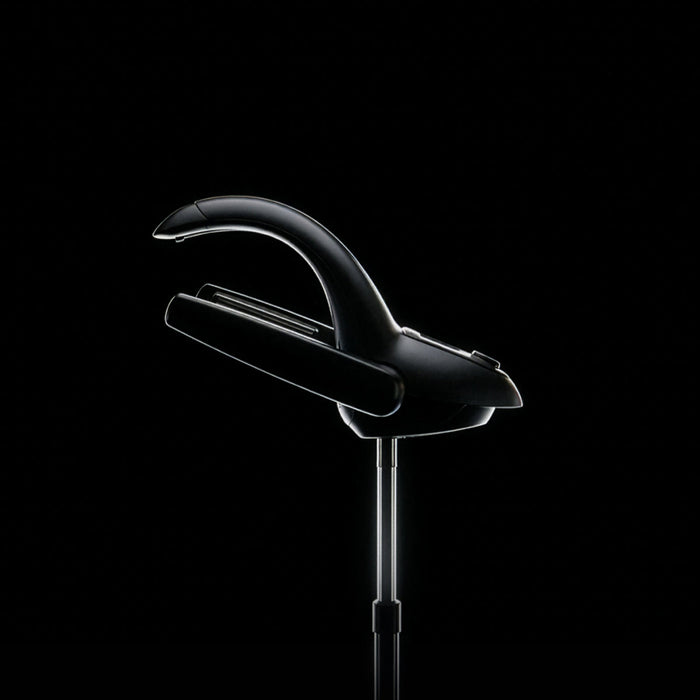
How to choose the right hair processor for your salon
The hood dryer is not radioactive. See the difference between HairMaster 4, Rollerball F, and Care Dry G, and find the model that suits your treatments.

Barber chairs in three price ranges: how to choose yours
From the chair that sells on looks to the iconic top models. See what you get in each of the three price ranges of barber chairs.

How to spot a counterfeit before you buy
Designs and trademarks may be legally protected, but as the buyer, you’re the one left without a warranty or certification. Here’s how to spot a copy before you pay for it.
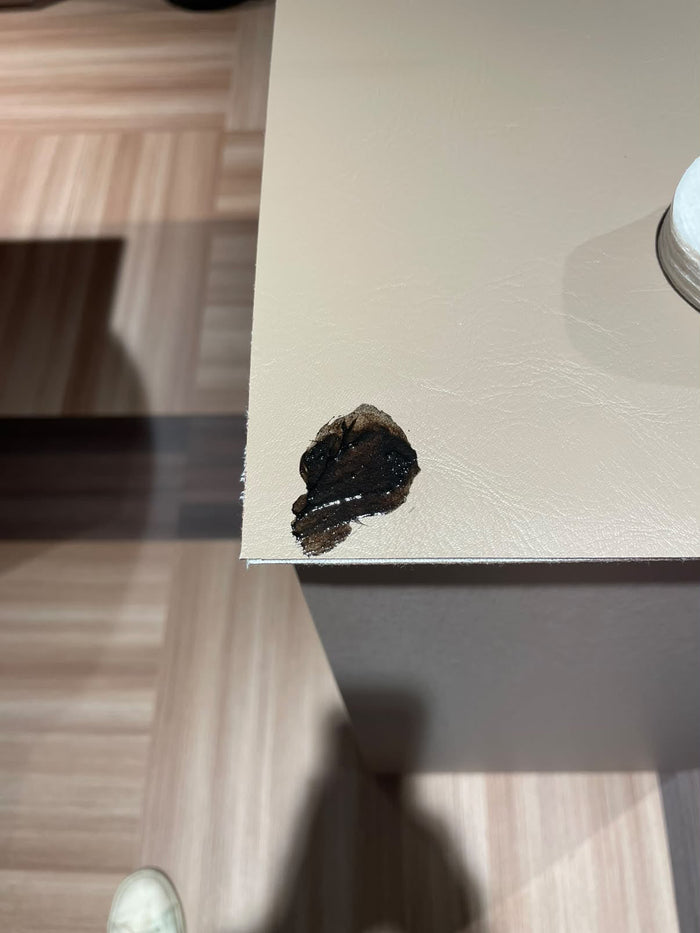
How to remove hair dye from your hairdressing chairs
Got hair dye on the upholstery? See how to remove even a dried stain with bleach, and why the color of your upholstery matters more than you think.
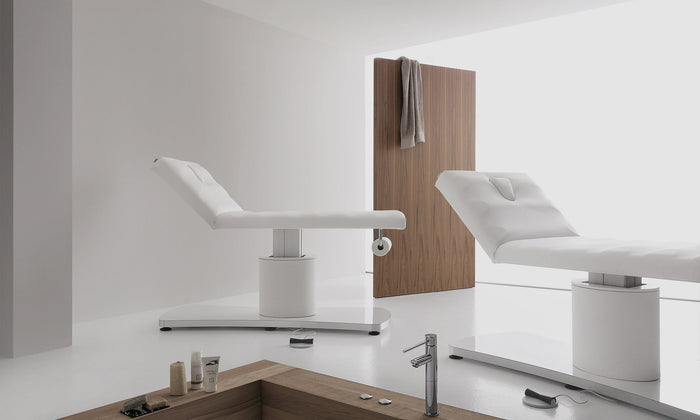
How do you become a cosmetologist in Denmark?
Beautician or cosmetologist? Explore the two routes into the profession in Denmark: the public vocational education and private cosmetologist courses, which schools you can choose from, and what you actually learn along the way.
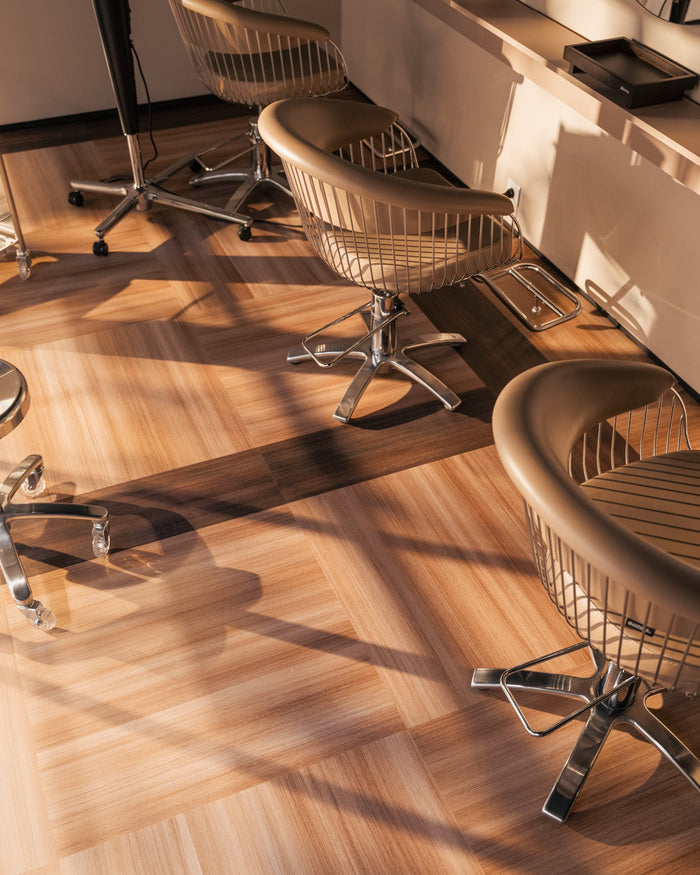
All the equipment a hair salon needs
The complete list of equipment, items and gear a hair salon needs, from a salon stool and mirror to lighting, extraction and towel warmers.
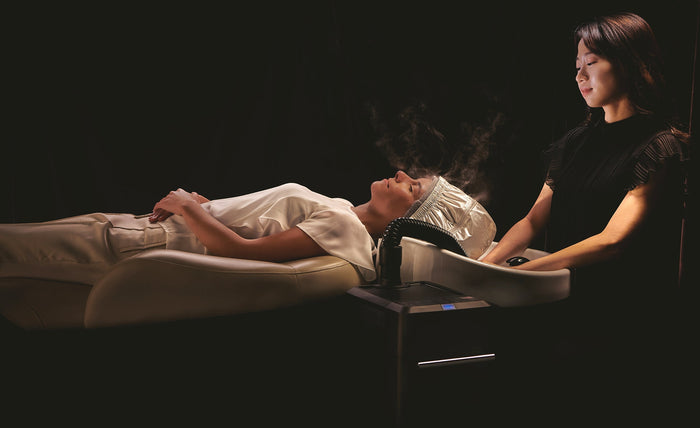
How to choose hotel furnishings for spas and wellness centers
Hotel furnishings require a different approach than a regular salon. See what to choose for the reception, lounge, treatment areas, and storage.
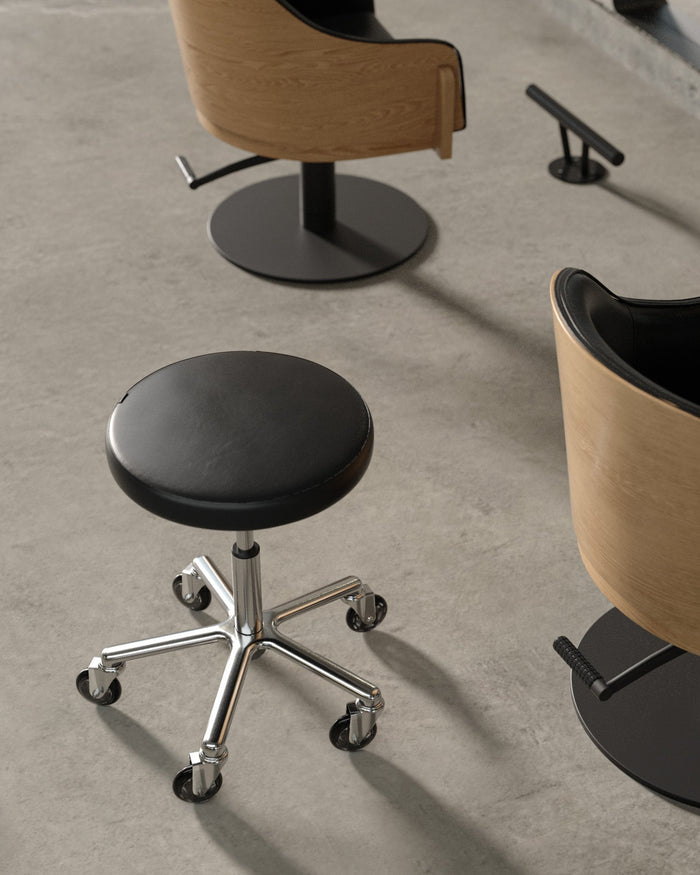
Hairdressing chairs, styling chairs and salon stools: what’s the difference?
If you’ve ever searched for “hairdressing chairs” and ended up looking at a chair for the client instead of yourself, you’re not alone. It’s one of the most common points of confusion in the industry, and we’re clearing it up once and for all. In short: there are two types of chairs in a salon. There’s the chair you sit on. And there’s the chair your client sits on. It sounds simple. But in practice, the terms are often used interchangeably, making it difficult to find the right one when you shop online.
HairMaster: How to replace heating tubes
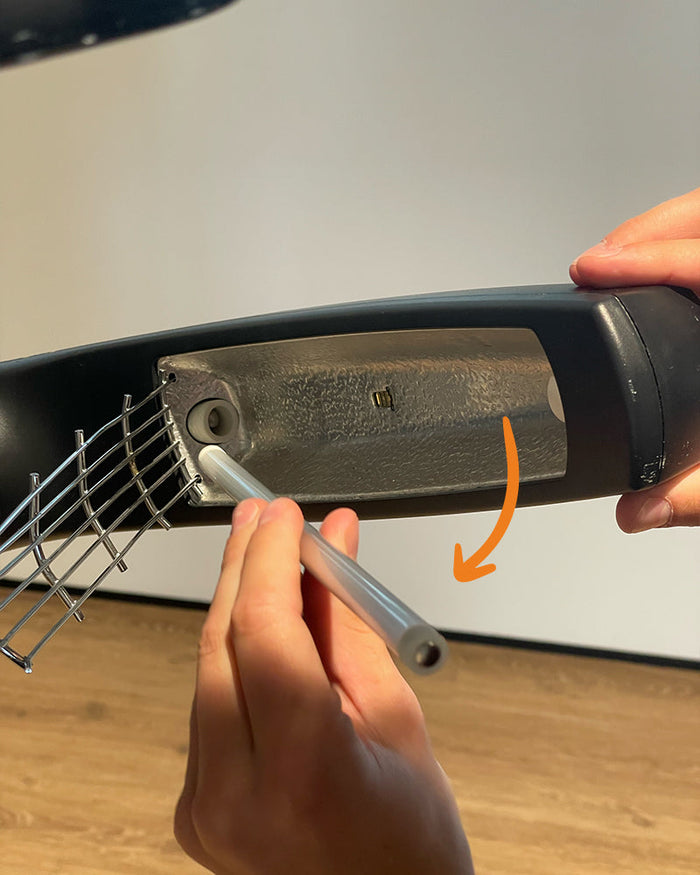
The heating tubes in your HairMaster are the parts that wear during use and can eventually burn out. Fortunately, replacing them is easy. Safety first: Turn off your HairMaster, unplug it, and let the head cool down completely. The heating tube is made of glass, so handle it carefully.