Have you read my other guides on salon stools, styling chairs, and treatment stools? This one is about the washing unit, and there are more details to consider than most people realise when the client needs to lie comfortably and safely during a hair wash.
Basin width
A wide basin is lovely to work with. There is room for the hair, and you avoid having to squeeze everything into a space that is too small. But look closely at the opening around the client’s neck. If it is too wide, especially for a smaller client, the neck does not sit closely enough against the edge, and the water runs down their back instead of into the drain. This is one of the most common challenges I hear about from salons with older or impractical washing units, where the basin was chosen for its appearance rather than this detail.
Neck cushion
A good neck cushion does two things at once. It gives the client something soft to rest their head against, and it creates a closer “connection” between the neck and basin, so the water actually runs where it should. Without the right neck cushion, even a well-shaped basin can let water seep past because a small gap forms around the neck.
Backrest angle
The further the client can lean back, the more relaxing the wash feels; most clients know this instinctively. The problem is that a deeper angle also increases the risk of water running the wrong way if the basin is not designed for it. If you have a simple basin combined with a very reclined position, you are asking for wet necks. These two features need to be chosen together, not separately.
Seat depth
A seat that is too deep sounds luxurious, but in practice it often has the opposite effect. If the client cannot move far enough back in the seat, they end up sitting on the edge with their body tense instead of relaxing throughout the wash. Always try the seat with an average client in mind, not just yourself.
leg rest
The leg rest raises the entire lower leg during the wash. You can choose a model without one, a freestanding leg rest that the client adjusts themselves, or an electric solution that raises the legs for you. Fredda massage wash, which you can read more about below, has a motorised leg rest as part of the massage function itself, not merely as a practical detail. The electric solution costs more, but saves you from having to adjust it manually between every client, something you will especially appreciate in a busy salon.
Footrest
A footrest is different from a leg rest, even though the names are quite similar. It is a bar that the client can rest their feet against, not something that raises or supports the entire leg. The RS Adria II from Takara Belmont is a good example of a washing unit with a built-in footrest, where the bar is a fixed part of the chair itself rather than a loose addition you attach afterwards. It is a small detail, but it affects how relaxed the client feels throughout the wash.
Massage
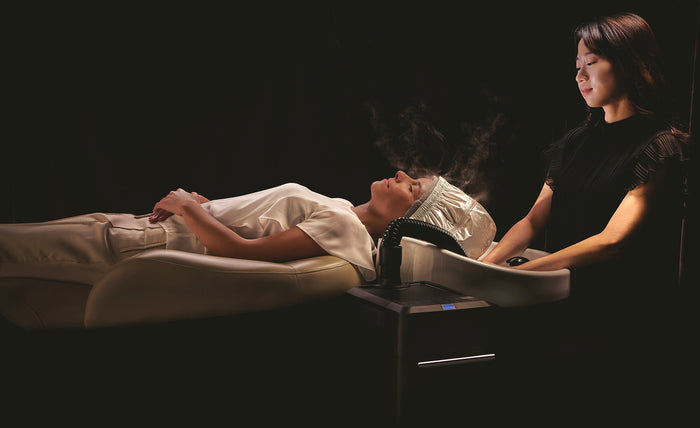
Washing units are available with several levels of massage. Some have no massage function at all, others have massage in the back alone, and the most comprehensive models offer massage in the backrest, seat, and leg rest at the same time. It is not just a luxury; it is often what makes the client remember your salon, because the wash becomes an experience in itself rather than merely a practical necessity before the haircut.
Mixer and tap
The mixer itself—the tap that controls the water—is available in many different qualities. The cheapest are made from coated plastic, while the better options are made from metal. In a professional salon, where the mixer is used daily by several stylists, I would always recommend metal. It is a small detail that rarely tops the list, but you will notice the difference after six months of daily use.
Senior cushion
If you cannot adjust the basin itself, a senior cushion is a simple add-on. It moves the client 5 to 6 centimetres closer to the washing basin, which is often enough to solve the problem for shorter or older clients without having to invest in a completely different model.
Hair strainer
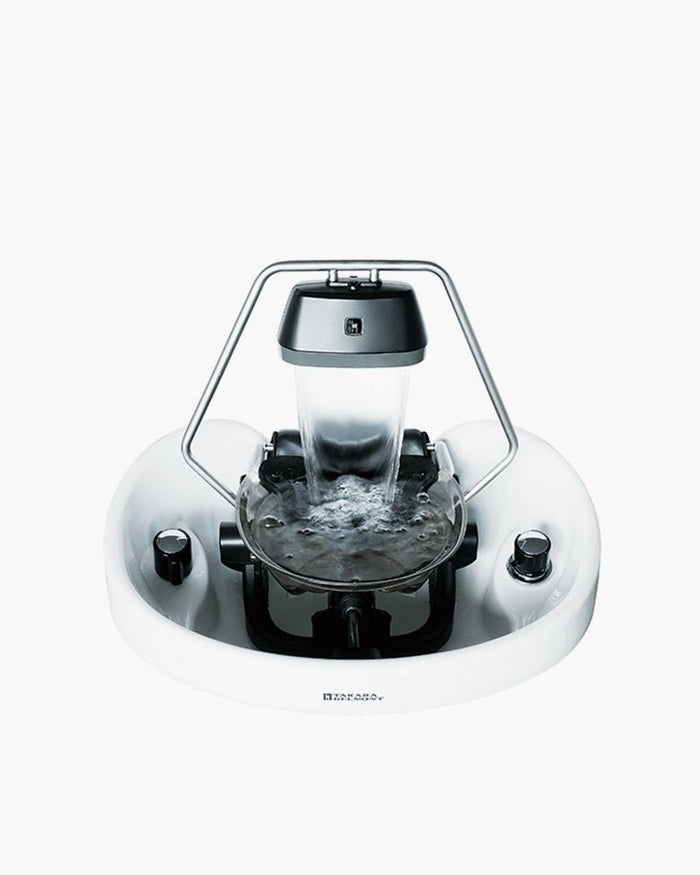
At the bottom of the basin sits the hair strainer, essentially the same type of strainer you know from an ordinary kitchen sink. Some models go a step further and have a filter beneath the strainer itself, which you can lift out and empty or replace instead of having to clean the drain directly. You will find this, among other places, on several models from Kiela and Takara Belmont. In any case, check that the strainer is easy to remove and put back in; it is a small detail you will thank yourself for later.
Fredda massage wash
If you want everything combined in one chair, Fredda massage wash from Solida Furniture is worth taking a closer look at. We helped develop it together with Solida, specifically adapted for Nordic salons rather than simply imported unchanged from another market. It has an especially deep washing basin, massage all the way through the back, seat, and leg rest, a narrow opening around the neck so the water actually runs where it should, and a neck support designed into the chair from the start instead of being a loose accessory. You can add a senior cushion, and the armrests are positioned lower than usual so the client’s shoulders can drop throughout the wash instead of being pushed upwards. See Fredda massage wash or our full selection of washing units with massage if you would like to compare it with other models.
Final thoughts
The right washing unit is about making the basin, neck cushion, angle, and add-ons work together—not about choosing the most expensive tap or the softest cushion separately. My recommendation is always the same: try as many models as possible side by side, so you can feel the difference for yourself instead of choosing based on a picture. Stop by our showroom and try our full selection of washing units, and together we will find the one that suits you and your salon best.
Write to me if you are unsure which washing unit is right for your salon.