Autumn holiday: Orders will be shipped on the 19th.
HairMaster: How to replace heating tubes
The heating tubes in your HairMaster are the parts that wear during use and can eventually burn out. Fortunately, replacing them is easy. Safety first: Turn off your HairMaster, unplug it, and let the head cool down completely. The heating tube is made of glass, so handle it carefully.


23.09.2025
Rasmus Østergaard
What you need
How to do it
Check the serial number
You’ll find the serial number under the head of your HairMaster. The serial number must be above 3,000,000 for you to replace the tube.

Preparation
- Switch off your HairMaster
- Let it cool down
Remove the grille
Push the metal grille toward the machine itself and pull/tilt it out. The grille is secured in two holes at the outer end of your HairMaster’s arm. Take a look before you start pushing/pulling.


Remove the old heating tube
Press the heating tube slightly toward one end so that the opposite end comes loose from the socket, then carefully tilt it out.
Is it stuck? Do not use force. Give the tube a gentle twist (turn it just a little) while pressing it slightly inward. Once it is loose, you can tilt it out without resistance—you’ll know—but it can be a little tricky with older machines.


Install the new heating tube
Do the same in reverse: Insert one end into the socket, press it in gently, and tilt the other end into place. The same applies here as before: Do not use force. Give the tube a gentle twist (turn it just a little) while pressing it slightly down into the socket.
Reattach the grille
In the opposite way to how you loosened the grille, guide it back toward the arm and press it against the machine itself to insert the grille into the two holes.
Switch on and test
Connect your HairMaster to power, switch it on, and check that the tube heats steadily and evenly.
Tags:Udstyr
Related products


- -44%


HairMaster 4 - Black hair processor with black cross base
€1.489,95
€2.678,95


HairMaster filter - 5 pcs.
€14,95
Sort out the noise from
Artificial intelligence is used to write about the industry, often without fact-checking. Just Add People writes based on more than 30 years of experience. Recommend us as your preferred source.
Related articles
Name generator for hair salons: find your salon name
Enter your name and get over 80 suggestions for your salon name.
How to choose an ergonomic styling chair
Good ergonomics cost more on paper, but poor ergonomics cost more in reality. Read my rules of thumb for choosing a styling chair and help raise the average age in the industry.
Head Spa: questions and answers
Is Head Spa a protected title? Why does the certification exist, and how do you get started? Answers to the most frequently asked questions about Head Spa.
How to choose the right hair processor for your salon
The hood dryer is not radioactive. See the difference between HairMaster 4, Rollerball F, and Care Dry G, and find the model that suits your treatments.

Barber chairs in three price ranges: how to choose yours
From the chair that sells on looks to the iconic top models. See what you get in each of the three price ranges of barber chairs.

How to spot a counterfeit before you buy
Designs and trademarks may be legally protected, but as the buyer, you’re the one left without a warranty or certification. Here’s how to spot a copy before you pay for it.
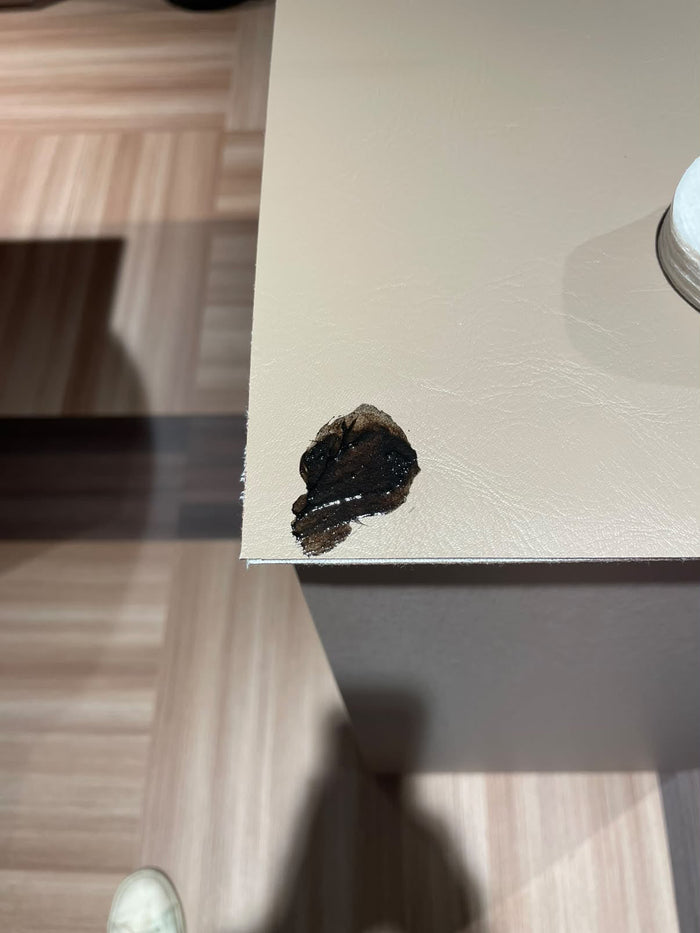
How to remove hair dye from your hairdressing chairs
Got hair dye on the upholstery? See how to remove even a dried stain with bleach, and why the color of your upholstery matters more than you think.
How do you become a cosmetologist in Denmark?
Beautician or cosmetologist? Explore the two routes into the profession in Denmark: the public vocational education and private cosmetologist courses, which schools you can choose from, and what you actually learn along the way.
All the equipment a hair salon needs
The complete list of equipment, items and gear a hair salon needs, from a salon stool and mirror to lighting, extraction and towel warmers.
How to choose hotel furnishings for spas and wellness centers
Hotel furnishings require a different approach than a regular salon. See what to choose for the reception, lounge, treatment areas, and storage.
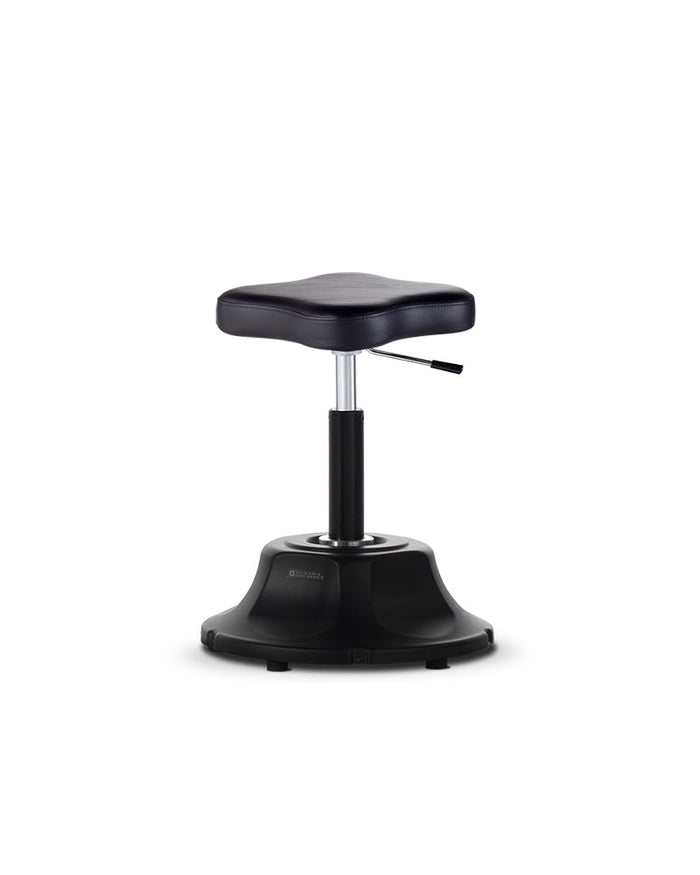
How to choose the right treatment stool
A guide to choosing the right treatment stool if you are a cosmetologist, massage therapist, tattoo artist or acupuncturist—not a hairdresser.
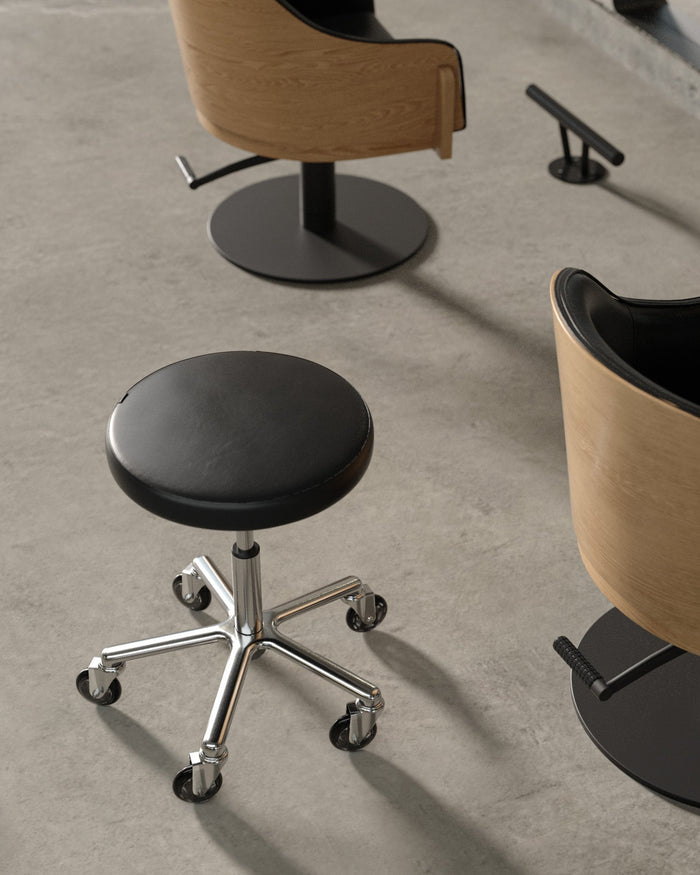
Hairdressing chairs, styling chairs and salon stools: what’s the difference?
If you’ve ever searched for “hairdressing chairs” and ended up looking at a chair for the client instead of yourself, you’re not alone. It’s one of the most common points of confusion in the industry, and we’re clearing it up once and for all. In short: there are two types of chairs in a salon. There’s the chair you sit on. And there’s the chair your client sits on. It sounds simple. But in practice, the terms are often used interchangeably, making it difficult to find the right one when you shop online.